

• AgoraVox sur Twitter
  • RSS
  • Agoravox TV
  • Agoravox Mobile

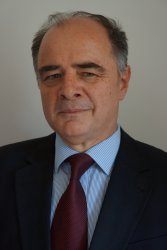
Renaud Bouchard

Renaud Bouchard

Juriste - Géopoliticien - Economiste (CEMI-EHESS) - Français et Européen -Passionné par les relations internationales et la diplomatie de crise, l'action politique et citoyenne. J'ai la volonté de rencontrer, réunir et fédérer les énergies pour un engagement et une renaissance politique nouvelles de la France et de l'Europe à l'occasion des prochaines échéances électorales.

Tableau de bord

  • Premier article le 08/09/2006
  • Modérateur depuis le 16/11/2006
Rédaction Depuis Articles publiés Commentaires postés Commentaires reçus
L'inscription 318 4475 17287
1 mois 0 0 0
5 jours 0 0 0
Modération Depuis Articles modérés Positivement Négativement
L'inscription 1037 1037 0
1 mois 0 0 0
5 jours 0 0 0

Ses articles classés par : ordre chronologique


Derniers commentaires


  • Renaud Bouchard Renaud Bouchard 24 décembre 2015 18:04

    @l’auteur.
    Très bonne analyse.
    Le cirque continue son voyage avec de nouveaux numéros à venir en Afrique subsaharienne et en Libye.
    A suivre.


  • Renaud Bouchard Renaud Bouchard 5 décembre 2015 18:03

    @M de Sourcessure
    Observation judicieuse :

    "Il s’est avéré que cette version du projet et la réalisation étaient destinée à hypnotiser les électeurs, car :

    - l’U. E. ne s’est pas construite en contrepoids des Etats-Unis, mais dans leur continuité et à leur service.

    - L’intérêt de la nouvelle échelle n’a avantagé que la circulation des capitaux et favorisé le dumping social.

    Encore que la Suisse soit une démonstration de la possibilité de pratiquer ces deux méthodes sans appartenir à une union, un espace ou autre confédération."

    S’agissant de la Suisse, la menace des USA de leur retirer leurs licences bancaires sauf à lever le secret bancaire de leurs établissements a été parfaitement comprise...La justice américaine étend son bras très loin dans le monde et sa main distribue des gifles sévères aux récalcitrants.

    http://www.lefigaro.fr/societes/2014/08/27/20005-20140827ARTFIG00018-comment-les-etats-unis-ont-fait-plier-ubs-et-credit-suisse.php


  • Renaud Bouchard Renaud Bouchard 5 décembre 2015 17:54

    @Abou Antoun et à l’auteur.

    Il était important que vous donniez de la visibilité à cet événement dont on n’entendra pas parler en France, et pour cause.

    Pensez-donc, les gens pourraient avoir des idées !

    Précisément, il faut qu’ils comprennent que les doigts de la main de fer européenne peuvent être desserrés, tordus et écartés.

    La solution est bien celle rappelée par Antoine :

    "Sortir de l’OTAN et de sa filiale l’U.E. voilà l’urgence. Toutes les tentatives d’intimidation ne sont que du chantage. La France doit retrouver sa souveraineté et mener sa politique."


  • Renaud Bouchard Renaud Bouchard 5 décembre 2015 17:46

    Dernières nouvelles du front. Grèce : la fin de la souveraineté nationale sur ses frontières.
    A quand la reprise en mains du Danemark et de sa non-obéissance à l’UE ?

    http://www.independent.ie/world-news/europe/eu-considers-measures-to-intervene-if-states-borders-are-not-guarded-34260926.html

    The European Union is considering a measure that would give a new EU border force powers to intervene and guard a member state’s external frontier to protect the Schengen open-borders zone, EU officials and diplomats said yesterday in Brussels.

    Such a move would be controversial. It might be blocked by states wary of surrendering sovereign control of their territory. But the discussion reflects fears that Greece’s failure to manage a flood of migrants from Turkey has brought Schengen’s open borders to the brink of collapse.

    Germany’s Thomas de Maiziere, in Brussels for a meeting of EU interior ministers, said he expected proposal from the EU executive due on December 15 to include giving responsibility for controlling a frontier with a non-Schengen country to Frontex, the EU’s border agency, if a member state failed to do so.

    "The Commission should put forward a proposal ... which has the goal of, when a national state is not effectively fulfilling its duty of defending the external border, then that can be taken over by Frontex," de Maiziere told reporters.

    He noted a Franco-German push for Frontex, whose role is largely to coordinate national border agencies, to be complemented by a permanent European Border and Coast Guard - a measure the European Commission has confirmed it will propose.

    Greece has come under heavy pressure from states concerned about Schengen this week to accept EU offers of help on its borders.

    Diplomats have warned that Athens might find itself effectively excluded from the Schengen zone if it failed to work with other Europeans to control migration.

    Earlier this week, Greece finally agreed to accept help from Frontex, averting a showdown at the ministerial meeting in Brussels.

    EU diplomats said the proposals to bolster defence of the external Schengen frontiers would look at whether the EU must rely on an invitation from the state concerned.

    "One option could be not to seek the member state’s approval for deploying Frontex but activating it by a majority vote among all 28 members," an EU official said.

    Under the Schengen Borders Code, the Commission can now recommend a state accept help from other EU members to control its frontiers. But it cannot force it to accept help - something that may, in any case, not be practicable.

    The code also gives states the right to impose controls on internal Schengen borders if external borders are neglected.

    As Greece has no land border with the rest of the Schengen zone, that could mean obliging ferries and flights coming from Greece to undergo passport checks.

    Asked whether an EU force should require an invitation or could be imposed by the bloc, Swedish Interior Minister Anders Ygeman said : "Border control is the competence for the member states, and it’s hard to say that there is a need to impose that on member states forcefully.

    « On the other hand, » he said, referring to this week’s pressure on Greece, "we must safeguard the borders of Schengen, and what we have seen is that if a country is not able to protect its own border, it can leave Schengen or accept Frontex. It’s not mandatory, but in practice it’s quite mandatory."

    Ministers and the Commission welcomed Greece’s decision to accept more help from Frontex.

    "Greece is finally taking responsibility for guarding the external European border," Austrian Interior Minister Johanna Mikl-Leitner said.

    "I have for months been demanding that Greece must recognise this responsibility and be ready to accept European help. This is an important step in the right direction."

    A dramatic increase in EU powers over national territory would be deeply controversial in much of Europe.

    On Thursday, Danes, who are part of the Schengen zone, heeded Eurosceptic calls and voted against giving their government power to deepen its cooperation with the EU policy agency.

    The European Union faces another test over the next two years as Britain, its second biggest economy, prepares to hold a referendum on whether to quit - although it is not a member of the 26-nation Schengen zone.

Voir tous ses commentaires (20 par page)

LES THEMES DE L'AUTEUR

Tribune Libre

Publicité


Publicité


Palmarès

Publicité


Agoravox.tv