
• AgoraVox sur Twitter
  • RSS
  • Agoravox TV
  • Agoravox Mobile

Philippe Vassé

Philippe Vassé

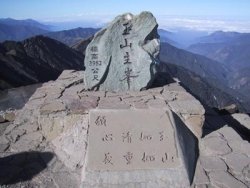
Historien de formation initiale, humaniste attaché au savoir, libre penseur et laïque, je réside à Taïwan, au bord de l'Océan Pacifique et aux pieds de magnifiques montagnes.

Tableau de bord

  • Premier article le 02/05/2007
  • Modérateur depuis le 26/06/2007
Rédaction Depuis Articles publiés Commentaires postés Commentaires reçus
L'inscription 107 1602 5286
1 mois 0 0 0
5 jours 0 0 0
Modération Depuis Articles modérés Positivement Négativement
L'inscription 0 0 0
1 mois 0 0 0
5 jours 0 0 0

Ses articles classés par : ordre chronologique


Derniers commentaires


  • Philippe Vassé Philippe Vassé 30 juillet 2007 17:40

    Zen,

    Dans les pays cités, le bouddhisme est le courant philosophique majoritaire, lequel laisse entière liberté à la recherche scientifique.

    D’autant que les bouddhistes des sociétés asiatiques modernes sont en général aussi des gens ayant reçu une culture générale plus poussée.

    Pour les quelques lecteurs qui versent dans un racisme tous azimuts, mais aussi à titre d’information documentaire, il est aisé de rappeler les nombreuses découvertes que l’humanité doit à la civilisation chinoise imprégnée par la philosophie bouddhiste, en termes de moyens de navigation, d’arts et de lettres, de techniques de relaxation et de santé, de feux d’artifices, de médicaments et.... de respect des érudits.

    Concernant le taoïsme, qui est aussi une philosophie, il a aujourd’hui en Asie un regard similaire sur les faits scientifiques. Par ailleurs, il convient de signaler qu’en Chine, en Inde, au Japon et à Taiwan, les études scientifiques sont non seulement valorisées et encouragées, mais que la montée du niveau culturel des populations a justement permis d’assurer le succès et le développement de la théorie de l’évolution initiée par Darwin.

    Il est juste de préciser que la majorité des Etats d’Asie orientale sont des Etats laïques, où la sphère publique et les religions sont séparées.

    Bien cordialement vôtre


  • Philippe Vassé Philippe Vassé 30 juillet 2007 08:26

    A Théophile Kouamouo,

    Je tenais à vous féliciter pour votre travail dans cet article qui a malheureusement fait l’objet de certains commentaires fort désobligeants, voire carrément racistes.

    Votre retenue et votre prudence dans ce contexte « français » particulier, où depuis quelques mois, certains se « décomplexent » vraiment et apparaissent sous leur véritable apparence naturelle, sont tout à votre honneur.

    Par ailleurs, je ne peux que vous encourager à rédiger des articles de fond comme celui-là sur les sujets « africains » pour Agoravox, car, outre leur intérêt informatif brut, il permet aux citoyens de France, souvent privés par leurs médias nationaux de nombreuses informations extérieures -comme intérieures au demeurant- de mieux connaître, s’ils le veulent vraiment, ce qui se passe ailleurs, dans le vaste monde que l’on appelle la planète Terre.

    C’est pourquoi il me semble très bénéfique pour Agoravox d’avoir des rédacteurs de votre qualité, de votre sensibilité et de votre curiosité.

    Bien cordialement vôtre d’Asie,


  • Philippe Vassé Philippe Vassé 30 juillet 2007 08:03

    Forest Ent,

    Je viens de lire votre article et vous en félicite. Outre qu’il est bien écrit, il allie la force de la forme et la réfléxion de fond.

    Juste pour pour souligner que le Ministère de la Parole que vous décrivez a ses limites d’effet, qui arrivent vite, je vous livre pour information cet article que je viens de trouver dans la rubrique « éditoriale » de mon journal local anglophone.

    Il semble que l’idylle entre la BCE et Nicolas Sarkozy soit fini et que l’investissement de ce dernier sur ce terrain soit arrivé aux frontières du possible réel.ce n’est pas moi qui l’affirme ou un opposant à Nicolas Sarkozy, mais un spécialiste financier américain réputé !!!

    En plus des on titre caustique, l’auteur, un citoyen américain, semble se moquer des deux « Titans » français que seraient Jean-Claude Trichet et Nicolas Sarkozy....Se gausserait-il des tailles différentes des deux hommes ?

    Aux dernières nouvelles ( de ce matin-heure locale), sur l’affaire avec la Lybie, la France passe maintenant pour, je cite, un autre article de mon journal local (taiwanais), « la cocue de l’histoire », avec un Lybie qui se sent « trahie » et une Bulgarie qui a libéré immédiatement les « otages », expulsés ou extradés, selon la version de Tripoli.

    Le contrat industriel franco-lybien prévu paraît mal parti aussi pour d’autres raisons.

    La parole est une chose utile comme l’idylle « européenne », mais les faits concrets ne suivent pas le Président français.

    Merci en tout cas pour votre travail d’information.

    Bien cordialement vôtre,

    PS : l’article est en ligne sur www.taipeitimes.com/News de ce jour 30 juillet 2007

    Rising rates and Nicolas Sarkozy : the ECB’s honeymoon is over

    By Melvyn Krauss

    Monday, Jul 30, 2007, Page 9 The honeymoon for the European Central Bank (ECB) is over. Because European interest rates are no longer clearly out of whack with the fundamentals of the euro-zone economy, monetary policy has become more complex.

    At the same time, France has given a strong mandate to its new president, Nicolas Sarkozy, who is without question the most formidable political adversary the ECB has had to face in its brief history. Sarkozy stands ready to pounce on any mistakes the ECB makes in this more difficult policy environment.

    With European interest rates up 200 basis points since late 2005 and the euro near a record high, Sarkozy wants the ECB to stop raising rates now. ECB President Jean-Claude Trichet and the Governing Council strongly disagree.

    At the ECB press conference early this month, Trichet signaled at least one more rate hike — either in September or October. Some Council members are known to support two more rate hikes before year-end.

    What makes monetary policy tricky at this point is that the German economy — which has been Europe’s locomotive during the current cyclical upturn — may be reaching a turning point.

    Surveys of business and investor confidence have softened — the respected IFO index of German business sentiment fell from 107.0 to 106.4 this month and the so-called « hard data » — industrial production, retail sales, etc — has been mixed. Second quarter German GDP has stalled after a surprisingly strong first quarter.

    The jury is out, but there is reason to be concerned. The euro is at record levels, oil prices are surging and interest rates are expected to go higher. The euro-zone economy — including Germany’s — is not bulletproof, though the hawks in the Governing Council often talk as if it were.

    Just as last year when there was unwarranted growth pessimism in Europe, this year there is unwarranted growth euphoria. Many Germans, in particular, are in denial that the cyclical upturn may be coming to an end.

    Were the Governing Council to miss the coming turn in the European economy while blithely raising interest rates, they would be portrayed as drunken sailors on a rate-raising binge. The roar for greater political control over Europe’s central bank would be deafening — and not only from France.

    The political costs for the ECB of making this type of mistake could be exorbitant. This is why the ECB must be very prudent as it considers whether to maintain the current pace of rate hikes, in which case it would raise rates by 25 basis points in September, or slow the pace down a bit, in which case the next rate hike would come in October at the earliest.

    In the current political environment, the dangers to the ECB from outside political interference are much greater from raising rates too fast than too slowly. If it goes too slow, the ECB has earned sufficient credibility as an inflation fighter to make up for it in the future with little if any economic or political cost. But if it goes too fast, the political cost could be substantial and irreversible. Politicians will push for more control and probably get it, Maastricht Treaty or no Maastricht Treaty.

    Waiting until October for the next move up is like buying insurance against a catastrophic loss.

    But will the ECB see it this way ? As a matter of principle, the hawks refuse to consider the political costs of their actions. In earlier times with no formidable adversaries in the political arena, this was a harmless affectation. But it is an extremely dangerous attitude with people like Sarkozy ready, willing and able to impose high political costs upon the bank should it stumble.

    There is more interest in Sarkozy’s populist ideas about currency intervention and adding a new political dimension to monetary policy decisions than is commonly realized.

    The hawks also suffer from what can be called a « catch up » complex. No matter how high rates go, they think they’re behind. They want to go in September so that they can go again in December, even before knowing the data — and they won’t stop there either.

    Even the doves might support a rate hike in September to counter-act the charge that they are being bullied out of a September hike by Sarkozy. There is no doubt that Sarkozy’s attacks on the ECB are having a counter-productive effect in this regard. They are pressuring the ECB to raise rates sooner than later.

    But a September rate move also serves Sarkozy’s interests, as it will give him more ammunition to portray the ECB as out of control and in need of political disciplining. For the ECB to protect itself from such charges, far better to wait until October when the bank can go to the public and say in effect : « Look, do you see how reasonable we have been. Now we must raise rates. »

    In the final analysis, whether the next rate increase comes in September, October or whenever — and it looks like September notwithstanding current warning signs that suggest a possible slowdown in the coming months — the data will determine how far the ECB goes with its rate hikes if the bank is savvy enough to keep the politicians at bay. But this is a big if.

    The fight is on between the two French titans — Trichet and Sarkozy — with the fate of Europe’s central bank hanging in the balance.

    Melvyn Krauss is a senior fellow at the Hoover Institution at Stanford University.


  • Philippe Vassé Philippe Vassé 28 juillet 2007 20:54

    A Emile Mourey,

    Décidément, vous ne prenez pas de vacances pour étudier autre chose que ma petite vie si peu intéressante pour vous.

    Il est amusant que vous confondiez le fait qu’un citoyen poursuivi par un « tsunami judiciaire » avec des moyens publics (selon Paradisial qui semble bien connaître la cause des citoyens d’Asnières et le vrai caractère du maire poursuivant)-en tant que directeur de publication d’un site associatif- soit condamné pour des propos sur ce site que la Justice estime diffamatoires et des...mensonges.

    Vous vous emportez quelque peu dans l’excès.

    Notons que le plaignant dont vous assurez ce faisant le service -à son détriment de plus- est mis en examen, non pour un motif bien secondaire aux yeux de tous, mais pour « complicité de favoritisme dans l’attribution de marchés publics ». Et su vous aviez suivi les commentateurs sur le site www.asnierois.org, visiblement, les mots « diffamatoires » dont j’ai ^pâti comme directeur de publication sont repris par la presse, les médias et.... les Juges !!!

    Passons donc ici donc sur vos confusions permanentes. Elles vous sont consubstantielles.

    Je ne sais de quelle source autorisée vous tirez la conclusion que je suis actif politiquement en France.

    Je vais donc vous rectifier une nouvellez fois : j’habite à Taiwan et je n’y exerce aucune activité politique. Mais, en lisant ma biographie qui vous passionne, vous l’auriez vite vu.

    Par ailleurs, je relève que si cela était le cas, je ne vois pas en quoi cela vous regarderait.

    Quant aux citations tronquées de la journaliste citant le maire d’Asnières, je vous remercie : elles ne font que fdu bien à ma bonne réputation sur ce site et ailleurs selon le principe « dis-moi qui te cite ainsi, je te dirai qui il est ».

    Avec toute ma compassion renouvelée pour votre acharnement du plus haut comique à me poursuivre de votre petit totale confusion.


  • Philippe Vassé Philippe Vassé 28 juillet 2007 20:28

    Pour information

    Voici la dernière série d’informations signées AP via TEPCO sur la centrale nucléaire japonaise accidentée par le tremblement de terre dont j’ai parlé dans l’article.

    Les faits parlent d’eux-mêmes : il faudra au moins 1 an de travaux pour que la centrale soit opérationnelle, la liste des dégâts RECONNUS à ce jour est encore allongée, le coût des réfections devient de plus en plus lourd, et des problèmes de sources du susbtitution énergétiques se posent.

    Je pense que cette dépêche nouvelle éclairera l’article d’un jour nouveau sous le seul angle de l’information, qui était son centtre.

    Au Japon, le débat continue à s’amplifier. Pour TEPCO, les choses cont aussi mal su lr plan financier que sur le terrain de la confiance publique.

    Dossier à suivre avec sérénité.

    Bien cordialement vôtre,

    Japan faces severe losses over delays at nuclear plant

    AP, TOKYO Friday, Jul 27, 2007, Page 5 The company that runs the nuclear power plant severely damaged by a magnitude 6.8 earthquake in northwestern Japan said yesterday it was still estimating damage 10 days after the temblor and did not know when it could reopen.

    The Mainichi Shimbun reported yesterday that a delay in resuming operations at the Kashiwazaki Kariwa plant in Niigata Prefecture — the world’s largest nuclear power facility — could result in ?200 billion (US$1.66 billion) losses for the fiscal year ending in March next year.

    The losses at Tokyo Electric Power, which runs the plant, would arise because it might be forced to restart oil and gas plants, which are less cost-efficient than nuclear power plants, the report said.

    TEPCO was still assessing the damage from the July 16 quake and did not yet know how much the shutdown would cost, company spokesman Jun Oshima said yesterday.

    The company has also not yet decided when the plant, which has been shuttered since the deadly quake, will resume operations, Oshima said, adding that it was considering restarting its oil and gas plants.

    News reports on Wednesday cited the head of a government-appointed panel investigating quake damage at the plant as saying it could take at least a year before the plant will reopen.

    The earthquake July 16 struck off the coast of Niigata, about 19km from the epicenter. It killed 11 people and injured more than 1,000.

    TEPCO has came under fire for being too slow in notifying the public about quake damage at the plant, including radioactive water sloshing out of a tank and into the sea, and radioactive material venting into the air.

    TEPCO has also said that parts of a 6m crane inside the reactor building at one of the facility’s seven reactors had been mangled — the first damage to be found so close to a reactor.

    Oshima said officials would conduct more detailed inspections at three of the six other reactor buildings yesterday.

    Work to repair the plant will not likely begin before the arrival of officials from the UN’s International Atomic Energy Agency, who are expected to inspect the plant in the next few weeks.

    In order to make up for a power shortage caused by the shutdown, six other power companies have agreed to provide emergency electricity on TEPCO’s request.

    Also yesterday, Greenpeace said its own inspections on Friday confirmed the level of radiation near the reactors did not surpass the normal level.

    The environmental group urged the government to thoroughly investigate the plant.

Voir tous ses commentaires (20 par page)


Publicité


Publicité


Palmarès

Publicité


Agoravox.tv